By Charmaine Mercer
Caring for my nails—cutting, trimming cuticles, applying manicure oil, and painting—is a recent practice. Except for a few years in high school and college, I mostly neglected them throughout my life, except for special occasions. Unlike my grandmother, who had long fingers and beautiful nails painted red or pink, mine were short, chunky, and usually chipped.
By the time I became a mom—juggling work on Capitol Hill and twin boys—a manicure felt like a waste of time and money. And besides, my fingers were regularly inside my kids’ mouths. While I regularly indulged in pedicures (being a native Californian obsessed with open-toe shoes, that felt like a necessity), my nails did not receive equal attention. Only for special occasions. And even then, the result was often painful hangnails.
COVID changed that. It introduced me to a new manicurist who encouraged me to actually care for my nails—not ignore them. She offered practical suggestions: apply cuticle oil at night with your lotion, use an emery board a few times each week while watching television. I experimented. I saw the results. I adjusted. Eventually I started regularly getting manicures and pedicures, and I always paint my nails.
In hindsight, I recognize the lessons I can harvest as a leader. My path to healthier nails was the result of observing a great model, being open to approaches I hadn’t tried, listening to someone who knew more than I did, and—most importantly—taking time. These aren’t just nail care lessons. They’re the ones I keep learning, in different forms, throughout my career.
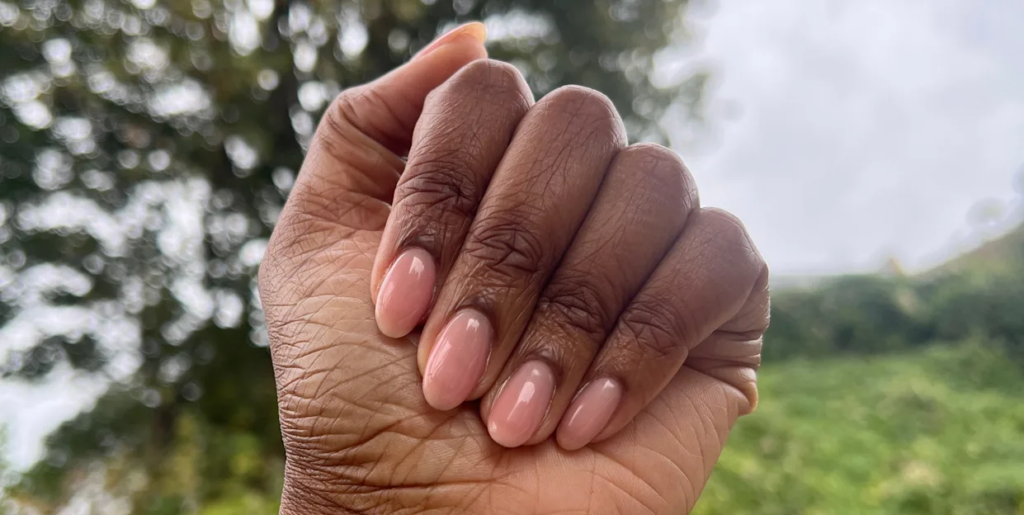
Linda Nga, my manicurist, didn’t overhaul my beliefs and behaviors overnight. She offered small adjustments—cuticle oil here, a different file there—and supported me in experimenting. She was encouraging when I became impatient and used my teeth to remove a challenging cuticle or forgot to file my nails. It was scaffolding to try something I’d been resistant to.
I think about this when I work alongside my colleague and sister-in-love, Danielle Lovell Jones. She relies on Google Suite in ways I’m far less familiar with and comfortable with. Left to my own preferences, I’d default to the tools I know. But when we collaborate, I try to meet her where she works, learning her tools, adapting to her workflows, letting go of my preference for familiarity and comfort in favor of what works for the collective. It’s a small thing. But it’s also practice. Flexibility, I’ve learned, is a leadership skill that atrophies if you don’t exercise it.
There’s a difference between hearing feedback and letting it change your direction. As an Enneagram 8, I’ve been reasonably good at the former for most of my career. The latter has been harder.
When I stepped into a role that had never previously existed, my instinct was to map out the full year in advance. Build the plan, establish the structure, demonstrate I knew what I was doing. My coach, mentor, and friend Akaya Windwood disagreed. She believed the plan was premature; that I needed to understand the landscape before I tried to design and build.
I yielded. Not easily, and not without uncertainty. But I let go of the plan.
What followed became the greatest professional accomplishment of my life. When I stopped trying to control what I didn’t yet understand, something opened up—in the work, in the relationships, and in me. Akaya saw what was possible before I could. I almost opposed what she could see.
This one I’m still learning.
There is enormous pressure in leadership—in nonprofit and philanthropic work especially—to respond, to decide, to act. Urgency is the default. Slowing down can feel like negligence, like you’re not working hard enough or don’t care deeply enough.
But my nails didn’t get healthier because I rushed the process. They got healthier because I shifted some habits, and time did the rest. Transformation requires the conditions for growth.
I am a work in progress on this. I still feel the pull to be responsive. But I’ve stopped treating that pull as wisdom. More often, it’s just old habits trying to live in my head rent free—which I no longer allow.
In recognition of Women’s History Month, I want to name and thank a few of the women who have shaped my learning as a leader: my maternal grandmother, Alma Watson, who showed me what beauty and care looked like long before I was ready to receive the lesson; my manicurist, Linda Nga, who offered her knowledge with patience and without judgment; and Tameka, Danielle, and Akaya—colleagues, mentors, and friends whose example, flexibility, and honesty have made me better.
Where has hindsight offered you a lesson? What woman has helped you lead? Click on the button below and let me know.
© 2025 Wit and Wisdom Collaborative | All Rights Reserved | Website and Branding by Stephanie Cariker