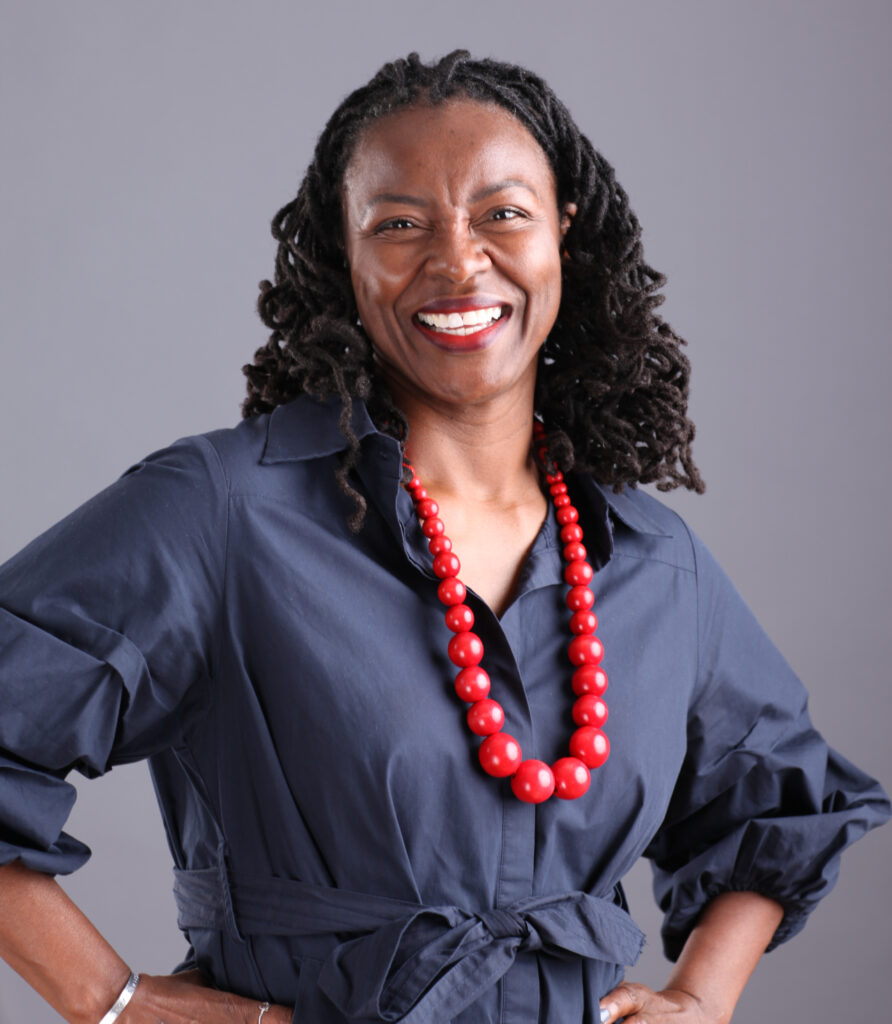
As a shorter, dark-skinned woman in America, who has been referenced as Negro, Black, and African American in one lifetime, I am very accustomed to people recognizing color. I’ve lived through eras in America where we’ve tried to be a melting pot, color-blind, race-neutral, and more recently identity-forward—each offering its own unique way of conceptualizing race and color in America. Each has failed in its own way to properly situate my humanity or that of others. Each of us is greater than our racial identity. None of us can be understood or appreciated simply by knowing a characteristic as simple as race.
So let me ask you to imagine something different.
What if there was a way you could see someone’s color, and it could tell you with near certainty what truly motivated that person? Imagine seeing the color green glowing around someone, signaling that they were an artist or creative—someone with whom you could share your deepest feelings and thoughts. How about if the color orange informed us that those people held a strong moral compass and could guide us collectively through moments of uncertainty? I don’t know about you, but at this moment in our nation’s history, if this were possible, I would actively seek out all the orange people and ask them to stand in unison to help our country find its moral center.
What if every person was one of nine colors, with each offering a roadmap to what excites us, how we communicate, and how we approach conflict? What if these colors could show how we act on our best days and on those not-so-great days, as well as help illuminate the context under which our decisions and actions are animated—or get stuck?
Thankfully, we don’t need to wait for Disney or Pixar to make such a movie, nor do we need to dye ourselves and guess which characteristics and attributes most likely align. The Enneagram, an ancient assessment system that identifies nine distinct personality types, offers exactly this kind of insight. The Enneagram reveals the invisible architecture of human motivation—the “why” beneath our behaviors.
Each of the nine Enneagram types represents a core motivation, a fundamental lens through which a person sees and interacts with the world:
When you know someone’s Enneagram type, you begin to understand not just what they do, but why they do it. You can predict how they’ll respond under stress, what they need when they’re struggling, and what brings out their highest self. This isn’t stereotyping—it’s a framework for genuine understanding and compassion.
What strikes me most about the Enneagram is that it offers us a model of diversity that transcends what’s visible. In a country still wrestling with how to honor our differences without being divided by them, the Enneagram reminds us that the most important differences between us aren’t always the ones we can see.
Two people who are the same race might operate from completely different motivations. And two people with different genders and sexual orientations might share the same fears and desires. The Enneagram cuts across every demographic line—race, gender, age, class, geography—to reveal a diversity that unites rather than divides.
This doesn’t minimize the reality or significance of racial identity and the very real impact of how society treats us based on what they see. My experience as a Black woman in America is real, valid, and shapes who I am. But the Enneagram offers another dimension—the human motivation which can connect you to people who look nothing like you and distinguish you from people who look exactly like you.

Understanding the Enneagram has practical applications in every area of life. In the workplace, knowing that your colleague is a Type 6 helps you understand why they ask so many questions—they’re not being difficult; they’re seeking the security they need to do their best work. In relationships, recognizing that your partner is a Type 9 helps explain why they avoid conflict—they’re not being passive; they’re trying to maintain the peace they value above all else.
And perhaps most importantly, knowing your own type gives you a map for personal growth. It shows you the patterns you repeat, the pitfalls you’re prone to, and the path toward becoming your best self.
At this moment in our collective journey, the Enneagram offers a way of seeing our humanity that doesn’t erase our visible identities but enriches our understanding of the invisible ones. I invite you: learn your Enneagram type. Learn the types of those you love, work with, and serve alongside. Use this knowledge not as another box to put people in, but to bridge deeper understanding.
Maybe if we could all see each other’s true colors—the ones that reveal what we fear, what we long for, and what we need to flourish—we’d focus on how collectively to make the country better for all of us.
So let me ask you to imagine something different.
© 2025 Wit and Wisdom Collaborative | All Rights Reserved | Website and Branding by Stephanie Cariker