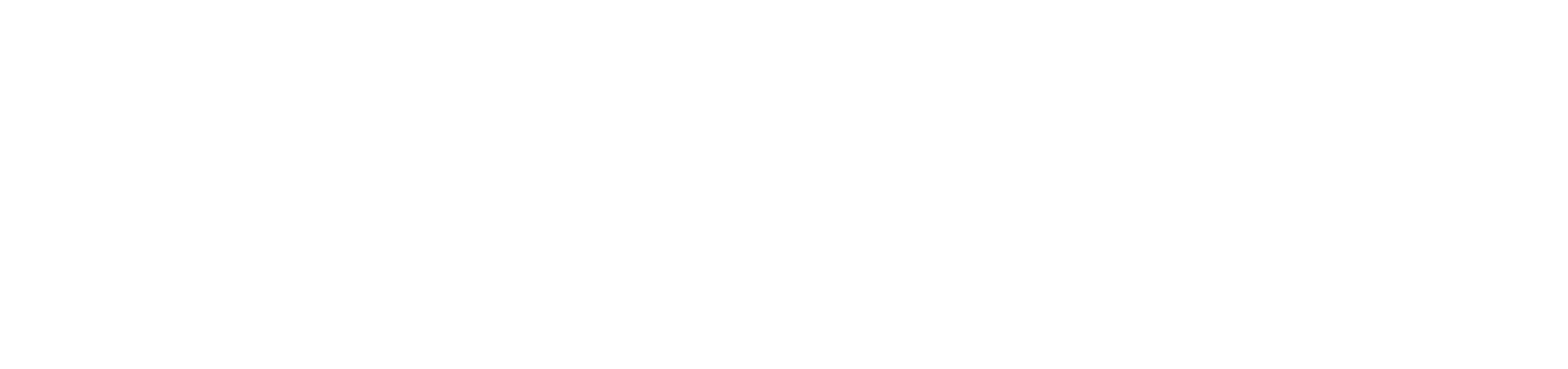
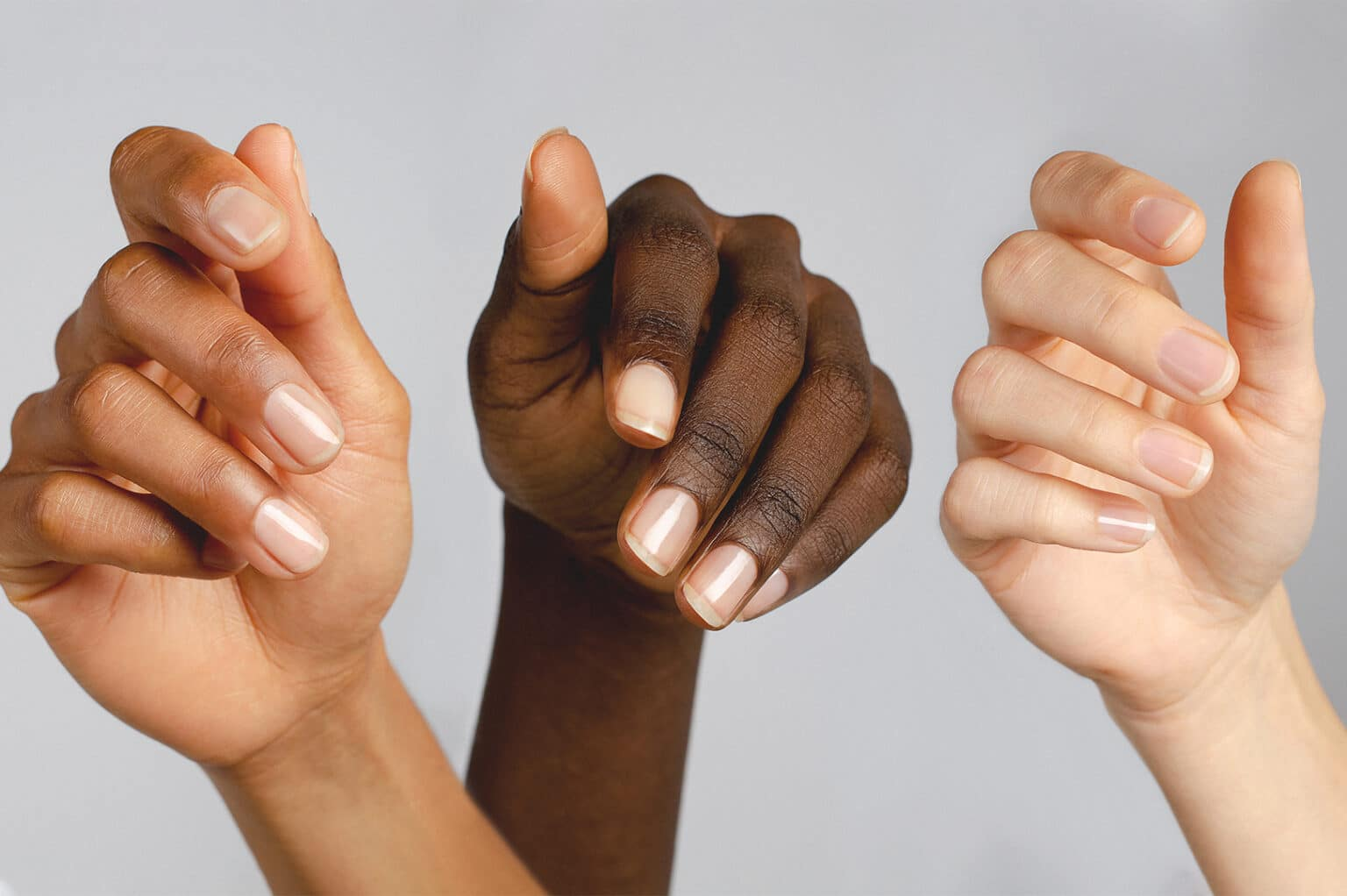
How Caring for My Nails Helped Me Be a Better Leader By Charmaine Mercer Caring for my nails—cutting, trimming cuticles, applying manicure oil, and painting—is a recent practice. Except for a few years in high school and college, I mostly neglected them throughout my life, except for special occasions. Unlike my grandmother, who had long fingers and beautiful nails painted red or pink, mine were short, chunky, and usually chipped. By the time I became a mom—juggling work on Capitol Hill and twin boys—a manicure felt like a waste of time and money. And besides, my fingers were regularly inside my kids’ mouths. While I regularly indulged in pedicures (being a native Californian obsessed with open-toe shoes, that felt like a necessity), my nails did not receive equal attention. Only for special occasions. And even then, the result was often painful hangnails. COVID changed that. It introduced me to a new manicurist who encouraged me to actually care for my nails—not ignore them. She offered practical suggestions: apply cuticle oil at night with your lotion, use an emery board a few times each week while watching television. I experimented. I saw the results. I adjusted. Eventually I started regularly getting manicures and pedicures, and I always paint my nails. In hindsight, I recognize the lessons I can harvest as a leader. My path to healthier nails was the result of observing a great model, being open to approaches I hadn’t tried, listening to someone who knew more than I did, and—most importantly—taking time. These aren’t just nail care lessons. They’re the ones I keep learning, in different forms, throughout my career. Observing a Great Model My maternal grandmother, Alma Watson, always wore her nails long, healthy, and painted red or pink. For years, I admired them without ever thinking I could have something similar. I made an unconscious decision that nails like hers simply weren’t for me. In leadership, I’ve made the same mistake—deciding that a quality or approach wasn’t mine to claim—until I watched someone embody it so naturally that my assumptions fell away. My colleague and friend Dr. Tameka McGlawn has been that model for me. She embodies humble and servant leadership in a way that doesn’t feel performative or practiced. Watching her patience, perspective, and passion has quietly shifted what I reach for in myself. Sometimes the most powerful development isn’t a workshop or a book. It’s proximity to someone whose leadership makes you want to be more—and better. Being Open to Other Approaches Linda Nga, my manicurist, didn’t overhaul my beliefs and behaviors overnight. She offered small adjustments—cuticle oil here, a different file there—and supported me in experimenting. She was encouraging when I became impatient and used my teeth to remove a challenging cuticle or forgot to file my nails. It was scaffolding to try something I’d been resistant to. I think about this when I work alongside my colleague and sister-in-love, Danielle Lovell Jones. She relies on Google Suite in ways I’m far less familiar with and comfortable with. Left to my own preferences, I’d default to the tools I know. But when we collaborate, I try to meet her where she works, learning her tools, adapting to her workflows, letting go of my preference for familiarity and comfort in favor of what works for the collective. It’s a small thing. But it’s also practice. Flexibility, I’ve learned, is a leadership skill that atrophies if you don’t exercise it. Listening to Others There’s a difference between hearing feedback and letting it change your direction. As an Enneagram 8, I’ve been reasonably good at the former for most of my career. The latter has been harder. When I stepped into a role that had never previously existed, my instinct was to map out the full year in advance. Build the plan, establish the structure, demonstrate I knew what I was doing. My coach, mentor, and friend Akaya Windwood disagreed. She believed the plan was premature; that I needed to understand the landscape before I tried to design and build. I yielded. Not easily, and not without uncertainty. But I let go of the plan.What followed became the greatest professional accomplishment of my life. When I stopped trying to control what I didn’t yet understand, something opened up—in the work, in the relationships, and in me. Akaya saw what was possible before I could. I almost opposed what she could see. Taking Time This one I’m still learning. There is enormous pressure in leadership—in nonprofit and philanthropic work especially—to respond, to decide, to act. Urgency is the default. Slowing down can feel like negligence, like you’re not working hard enough or don’t care deeply enough. But my nails didn’t get healthier because I rushed the process. They got healthier because I shifted some habits, and time did the rest. Transformation requires the conditions for growth. I am a work in progress on this. I still feel the pull to be responsive. But I’ve stopped treating that pull as wisdom. More often, it’s just old habits trying to live in my head rent free—which I no longer allow. In recognition of Women’s History Month, I want to name and thank a few of the women who have shaped my learning as a leader: my maternal grandmother, Alma Watson, who showed me what beauty and care looked like long before I was ready to receive the lesson; my manicurist, Linda Nga, who offered her knowledge with patience and without judgment; and Tameka, Danielle, and Akaya—colleagues, mentors, and friends whose example, flexibility, and honesty have made me better. Where has hindsight offered you a lesson? What woman has helped you lead? Click on the button below and let me know. Let’s Connect
Building Inner Resilience: A Call to Philanthropic Leaders
As the year draws to a close, I find myself returning to the rituals that sustain me—pausing, breathing, and reflecting. When I turned the calendar to December 1st, I was struck by how much has unfolded this year, both personally and across the philanthropic landscape. The colder temperatures and shorter days seem to invite a deeper kind of reflection, one that asks us not just what we accomplished, but how we showed up. I was reminded of a session I led at October’s Grantmakers for Education conference, Transformative Philanthropy: Courageous and Visionary Leadership for Education and Civil Rights, in Memphis. I had the privilege of facilitating a conversation on Inner Resilience for Philanthropic Leaders, where we explored how the Enneagram can support leaders who are navigating today’s landscape of volatility, uncertainty, chaos, and ambiguity (VUCA). The challenges facing philanthropy have never been more complex. As Richard Besser and Carmen Rojas recently noted in Nonprofit Quarterly, the current administration’s attacks on hard-won freedoms pose significant threats to independent institutions, due process, and the social safety net.¹ Mounting legal uncertainty and political divisiveness strain the sector’s ability to protect equity and advance long-term change. This tension is felt not only in the work itself, but within organizations and across the communities they serve. Nonprofit leaders are being asked to defend democracy, advance equity, and drive meaningful impact—all while managing scarce resources and navigating increasingly polarized environments. As Besser and Rojas emphasize, this moment demands that philanthropy “speak up—loudly, boldly, and often” and “act with the full weight of institutional resources.”¹ Yet bold action is only sustainable when leaders can remain grounded, values-aligned, and purpose-driven amid chaos. In this context, philanthropy requires more than strategic thinking—it requires inner resilience. Besser and Rojas remind us that this moment is “not about preserving philanthropy, but about fighting for a common future.”¹ To meet that call, leaders need support not only for organizational strategy and outcomes but for their own capacity to lead with clarity, courage, and steadiness. That’s where Wit and Wisdom Collaborative comes in. We partner with nonprofit and philanthropic leaders to strengthen teamwork, strategy, and organizational development in ways that honor both mission impact and leadership sustainability. Our work is grounded in the belief that courageous, long-term action begins with an inner foundation of resilience, clarity, and purpose. If you’re preparing to deepen your leadership and organizational capacity in 2026, we would be honored to support you. Reach out to Wit and Wisdom Collaborative to get started. Together, we can build the steadiness, alignment, and resilience this moment—and your work—demands. Contact Us ¹ Richard Besser and Carmen Rojas, “Four Ways Philanthropy Can Support the Movement for a Third Reconstruction,” Nonprofit Quarterly, December 1, 2025, https://nonprofitquarterly.org/four-ways-philanthropy-can-support-the-movement-for-a-third-reconstruction/.

Critical Yeast: Small, Connected Leadership Changes Everything
Critical Yeast: Small, Connected Leadership Changes Everything I was reflecting recently on the concept of critical yeast—a metaphor coined by John Paul Lederach. It stayed with me because it answers a question many purpose-driven leaders are asking right now. Mass vs. Yeast: Two Paths to Change We hear often about critical mass—that magical tipping point when enough people align and shift happens. Critical mass relies on volume and force. It requires numbers, momentum, and often upheaval. Critical yeast works differently. A small amount of yeast—nearly invisible—doesn’t overpower other ingredients. Instead, it awakens them. It moves through the dough quietly, fundamentally transforming it from within. The yeast doesn’t dominate or force. It catalyzes. In this moment when societal norms are contested, communities are fractured, and division masquerades as leadership, I’m reassured by this image: a small number of deeply connected people—in authentic relationships rooted in trust—can make transformational change. Not through force or volume, but through presence and integrity. The Foundation: Know Yourself To be critical yeast, you must first understand yourself. This begins with real self-awareness—not the performative kind, but the kind that reveals what you have yet to learn, even as you appreciate what you already know and celebrate what you’ve accomplished. It’s the humility to say “I don’t know” without shame, and to listen without planning your response. From this foundation comes everything else: the capacity to make connections without an obvious quid pro quo. To make introductions that strengthen others. To celebrate others’ growth as eagerly as your own. To recognize that your influence multiplies when you share generously, not when you hoard. Like yeast transforms bread, deeply connected relationships rooted in self-awareness and generosity transform organizations, communities, and cultures. Ready to Deepen Your Impact? If this resonates, the next step is to begin. Connect with Wit and Wisdom Collaborative to explore how the concept of critical yeast can reshape your strategy, your team, and your influence. The transformation you seek isn’t found in volume. It’s found in depth. Let’s Get Started Let’s begin a conversation about where you are, where you want to go, and what alignment could look like along the way. Fill out the form and I’ll be in touch soon. Name Email Message Send

Seeing Color Differently: How the Enneagram Offers a New Lens for Understanding Each Other
Seeing Color Differently: How the Enneagram Offers a New Lens for Understanding Each Other As a shorter, dark-skinned woman in America, who has been referenced as Negro, Black, and African American in one lifetime, I am very accustomed to people recognizing color. I’ve lived through eras in America where we’ve tried to be a melting pot, color-blind, race-neutral, and more recently identity-forward—each offering its own unique way of conceptualizing race and color in America. Each has failed in its own way to properly situate my humanity or that of others. Each of us is greater than our racial identity. None of us can be understood or appreciated simply by knowing a characteristic as simple as race. So let me ask you to imagine something different. What if there was a way you could see someone’s color, and it could tell you with near certainty what truly motivated that person? Imagine seeing the color green glowing around someone, signaling that they were an artist or creative—someone with whom you could share your deepest feelings and thoughts. How about if the color orange informed us that those people held a strong moral compass and could guide us collectively through moments of uncertainty? I don’t know about you, but at this moment in our nation’s history, if this were possible, I would actively seek out all the orange people and ask them to stand in unison to help our country find its moral center. What if every person was one of nine colors, with each offering a roadmap to what excites us, how we communicate, and how we approach conflict? What if these colors could show how we act on our best days and on those not-so-great days, as well as help illuminate the context under which our decisions and actions are animated—or get stuck? This Isn’t Science Fiction—It’s the Enneagram Thankfully, we don’t need to wait for Disney or Pixar to make such a movie, nor do we need to dye ourselves and guess which characteristics and attributes most likely align. The Enneagram, an ancient assessment system that identifies nine distinct personality types, offers exactly this kind of insight. The Enneagram reveals the invisible architecture of human motivation—the “why” beneath our behaviors. Each of the nine Enneagram types represents a core motivation, a fundamental lens through which a person sees and interacts with the world: Type 1 (The Reformer) is driven by a desire for integrity and improvement Type 2 (The Helper) seeks to be loved and needed Type 3 (The Achiever) pursues success and validation Type 4 (The Individualist) yearns for identity and significance Type 5 (The Investigator) craves knowledge and understanding Type 6 (The Loyalist) seeks security and support Type 7 (The Enthusiast) pursues satisfaction and joy Type 8 (The Challenger) desires control and self-protection Type 9 (The Peacemaker) seeks peace and harmony When you know someone’s Enneagram type, you begin to understand not just what they do, but why they do it. You can predict how they’ll respond under stress, what they need when they’re struggling, and what brings out their highest self. This isn’t stereotyping—it’s a framework for genuine understanding and compassion. A Different Kind of Diversity What strikes me most about the Enneagram is that it offers us a model of diversity that transcends what’s visible. In a country still wrestling with how to honor our differences without being divided by them, the Enneagram reminds us that the most important differences between us aren’t always the ones we can see. Two people who are the same race might operate from completely different motivations. And two people with different genders and sexual orientations might share the same fears and desires. The Enneagram cuts across every demographic line—race, gender, age, class, geography—to reveal a diversity that unites rather than divides. This doesn’t minimize the reality or significance of racial identity and the very real impact of how society treats us based on what they see. My experience as a Black woman in America is real, valid, and shapes who I am. But the Enneagram offers another dimension—the human motivation which can connect you to people who look nothing like you and distinguish you from people who look exactly like you. Applying it to Life Understanding the Enneagram has practical applications in every area of life. In the workplace, knowing that your colleague is a Type 6 helps you understand why they ask so many questions—they’re not being difficult; they’re seeking the security they need to do their best work. In relationships, recognizing that your partner is a Type 9 helps explain why they avoid conflict—they’re not being passive; they’re trying to maintain the peace they value above all else. And perhaps most importantly, knowing your own type gives you a map for personal growth. It shows you the patterns you repeat, the pitfalls you’re prone to, and the path toward becoming your best self. An Invitation At this moment in our collective journey, the Enneagram offers a way of seeing our humanity that doesn’t erase our visible identities but enriches our understanding of the invisible ones. I invite you: learn your Enneagram type. Learn the types of those you love, work with, and serve alongside. Use this knowledge not as another box to put people in, but to bridge deeper understanding. Maybe if we could all see each other’s true colors—the ones that reveal what we fear, what we long for, and what we need to flourish—we’d focus on how collectively to make the country better for all of us. So let me ask you to imagine something different.